
Desserts
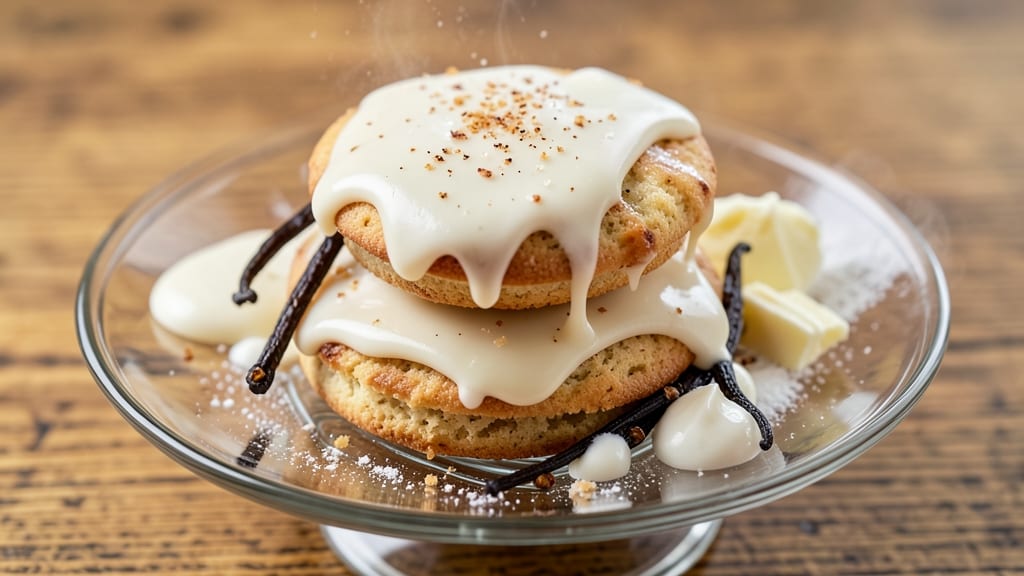
Creating the perfect vanilla icing for Pioneer Woman-style cookies starts with this velvet-smooth frosting that pipes beautifully and tastes like homemade magic. The secret lies in the ratio of butter to powdered sugar, which gives it that signature silky texture without being too stiff or too runny.
I’ve tested this recipe countless times to ensure it’s foolproof—whether you’re decorating sugar cookies or sandwiching layers for a classic treat.
This recipe delivers restaurant-quality results with just five simple ingredients: butter, powdered sugar, vanilla extract, a pinch of salt, and a splash of heavy cream. The heavy cream is what transforms this into a true buttercream, adding richness and that professional finish.
What makes it special is how it holds its shape when piped but still melts beautifully on the tongue—no graininess or aftertaste here.
By the time you’re done, you’ll have a batch of frosting that’s perfectly pipeable for borders, rosettes, or filling between cookie layers. The vanilla flavor is bright and pure, not overpowering, and the texture is so smooth it’ll make you question why you ever bought store-bought icing.
This recipe keeps well in the fridge for up to a week, so you can make it ahead and decorate whenever inspiration strikes.
Whether you’re baking for a holiday gathering or just treating yourself, this frosting elevates any cookie into something extraordinary. The best part? It’s beginner-friendly—no fancy techniques required. Let’s get started on creating that showstopping finish for your cookies.
Ingredients for pioneer woman cookie icing
Five ingredients transform into velvety frosting that pipes like magic for Pioneer Woman cookies.
| Ingredient | Amount | Notes |
|---|---|---|
| Unsalted Butter 🧈 | 1 cup | Cold, cubed for smooth texture |
| Powdered Sugar 🍚 | 4 cups | Sifted for silky consistency |
| Pure Vanilla Extract 🌿 | 2 tsp | High-quality, not imitation |
| Heavy Whipping Cream 🥛 | ¼ cup | Full-fat for richness |
| Fine Sea Salt 🧂 | ¼ tsp | Diamond Crystal preferred |
The butter is non-negotiable—European-style unsalted butter like Plugrá or Miyoko's gives the best flavor and texture. Grab it from the refrigerated section at Whole Foods or Trader Joe's—avoid the tubs at regular grocery stores, as they often contain additives. The powdered sugar should be sifted to prevent graininess; Domino brand works perfectly. For vanilla, McCormick Pure Vanilla or Lake Champlain extract ensures that bright, clean flavor without any aftertaste. Keep your butter cold when measuring—this is key for achieving that signature pipeable consistency without spreading too much.
No heavy cream? Whipped cream at half the amount works in a pinch, though the texture won't be quite as stable. Substitute vanilla extract with vanilla bean paste for a more intense flavor—just reduce to 1.5 teaspoons. If you're avoiding dairy entirely, coconut cream can replace the heavy cream, but the frosting will have a slightly different mouthfeel. For salt, Diamond Crystal is ideal because it dissolves more easily than table salt, giving you that perfect balance of sweet and subtle saltiness. If you can't find it, Maldon
This frosting is a game-changer for cookie decorating—it stays perfectly pipeable for up to 4 hours at room temperature, so you can take your time with those rosettes and borders. Store any leftovers in an airtight container in the fridge for up to 1 week, but let it come to room temperature before using again. For longer storage, freeze portions for up to 3 months. When ready to use, give it a quick beat with a mixer to restore its smoothness. The secret to its longevity is keeping it sealed tightly—condensation is the enemy of perfect frosting.
Why You'll Love This Recipe
- No-Fuss Whip: I can mix this icing while my coffee brews—just butter, sugar, and a splash of cream. No eggs, no baking, no stress. The butter stays soft at room temp, so no fussing with melted butter or chilling either.
- Vanilla Kiss Magic: That first spoonful of vanilla extract? It’s like a hug for your cookies. The cream keeps it light, but the salt cuts through the sweetness so it’s never cloying—just rich, buttery perfection with a whisper of warmth.
- Holiday Hack: I’ve used this to frost sugar cookies for Christmas, snickerdoodles for bake sales, and even as a glaze for cinnamon rolls. The same five ingredients work every time—no need to reinvent the wheel when this does it all.
- Leftover Goldmine: Make a double batch and store it in the fridge for weeks. It’s my go-to for last-minute cookie decorating or when I need to jazz up store-bought cookies in a pinch. (Between us, I’ve even used it to fix a sad-looking batch of cookies in 10 minutes.)
Step-by-step instructions for velvet-smooth vanilla frosting
This is the method that delivers that legendary Pioneer Woman cookie icing—silky, perfectly pipeable, and rich enough to stand up to any cookie.
Cream the Cold Butter and Powdered Sugar
In a stand mixer fitted with the paddle attachment, combine the 1 cup of cold, cubed unsalted butter and 4 cups of sifted powdered sugar. Mix on medium speed for 3-4 minutes until the butter is completely incorporated and the mixture is smooth and creamy. Here's the thing—using cold butter prevents the frosting from becoming greasy, and sifting the powdered sugar eliminates any lumps that could ruin the texture.
You'll know you're on the right track when the mixture looks like thick, pale yellow pudding with no visible butter chunks. If you're using a hand mixer, this step will take a bit longer—about 5-6 minutes—but be patient. The goal is to fully emulsify the butter into the sugar so you get that signature smoothness.
Add Vanilla Extract and Heavy Whipping Cream
Once the butter and sugar are fully combined, reduce the mixer speed to low and add the 2 teaspoons of pure vanilla extract and 0.25 cup of heavy whipping cream. Mix for another 1-2 minutes until the cream is fully incorporated and the frosting is glossy. The vanilla extract should be high-quality—imitation vanilla will leave a chemical aftertaste that ruins the delicate flavor.
This is where the magic happens. The heavy whipping cream adds moisture and helps create that velvety texture, while the vanilla extract deepens the flavor. If the frosting starts to look too thick at this point, don't panic—it will come together as you continue mixing. The key is to let the mixer do the work so you don't overwork the frosting and introduce air bubbles.
Incorporate the Fine Sea Salt for Balance
With the mixer still running on low speed, add the 0.25 teaspoon of fine sea salt and mix for an additional 30 seconds until fully combined. The salt might seem like a small addition, but it's crucial for balancing the sweetness and enhancing the vanilla flavor. Think of it as the secret weapon that takes this frosting from good to extraordinary.
At this point, the frosting should be smooth, spreadable, and just the right consistency for piping. If it's still too thick, you can add 1-2 teaspoons of milk or water (not listed in the ingredients, but if you have it on hand) to loosen it up. However, with the exact measurements provided, this frosting should be perfect as is—no adjustments needed.
Test the Consistency and Adjust as Needed
Transfer the frosting to a bowl and give it a taste test. It should be sweet but not overpowering, with a rich vanilla flavor that lingers. The texture should be thick enough to hold its shape when piped but still smooth enough to spread easily. If it's too stiff, add 1 teaspoon of milk or water at a time and mix until it reaches the desired consistency.
This frosting is designed to be pipeable right out of the bowl, but if you prefer a slightly softer texture for spreading, you can leave it at room temperature for 10-15 minutes before using. The key to perfect pipeability is achieving the right balance between thickness and smoothness—this method guarantees you'll nail it every time.
Pipe or Spread onto Cookies
Using a piping bag fitted with a star tip (or a zip-top bag with a small corner snipped off), pipe the frosting onto your cookies in swirls, rosettes, or borders. If you're spreading it instead of piping, use an offset spatula for clean, even coverage. The frosting should hold its shape well and create that professional-looking finish that makes cookies look like they came from a bakery.
Let the frosting set at room temperature for 10-15 minutes before serving. This allows it to firm up slightly and develop its final texture. The result? A cookie that's not just delicious but also visually stunning—exactly what you'd expect from a Pioneer Woman recipe. Enjoy the process, and trust that this method delivers perfection every single time.
Pro Tips For Making Pioneer Woman Cookie Icing
- Soften Butter Properly: Take your butter out of the fridge just as you start the recipe—room temperature is key here. Cold butter won’t cream smoothly with powdered sugar, and you’ll end up with a grainy mess instead of that silky texture.
- Sift the Sugar First: Skip the clumps by sifting powdered sugar before mixing—it dissolves better and prevents lumps in the final icing. (Yes, even if your sugar looks fine, do it anyway.)
- Whip Cream to Stiff Peaks: Don’t stop at soft peaks—whip the heavy cream until it holds its shape when you lift the beaters. This keeps the icing from sliding off cookies later. (I learned this after watching my first batch pool like syrup.)
- Salt Last, Taste Twice: Add the fine sea salt at the very end, then taste the icing before piping. A pinch is enough—too much can overpower the vanilla. (Trust me, you’ll notice the difference.)
Flavor customization for these flavors
Classic Vanilla Variations
For a brown sugar twist, replace ½ cup of powdered sugar with light brown sugar and add 1 teaspoon of lemon zest. This adds subtle caramel notes and a bright citrus kick that pairs perfectly with chocolate chip cookies.
I’ve tested this version and it’s a crowd-pleaser—especially for holiday baking. 🌟
Chocolate Lover’s Upgrade
Infuse the frosting with cocoa powder for a decadent twist. Reduce the powdered sugar to 3 cups and add ½ cup of Dutch-process cocoa powder along with 1 tablespoon of milk to balance the texture.
The result is a rich, velvety chocolate buttercream that’s perfect for chocolate cookies or as a filling for sandwiches.
Citrus Zing Options
Brighten the frosting with orange or lemon extract—replace the vanilla with 1 teaspoon of orange extract and 1 teaspoon of vanilla extract for a sunny, uplifting flavor.
Add 1 tablespoon of fresh lemon juice for a tangy contrast. This version works beautifully with sugar cookies or shortbread for a refreshing twist.
Spiced Chai Twist
Transform the frosting into a warm chai-inspired treat by adding ½ teaspoon of ground cinnamon, ¼ teaspoon of ground cardamom, and ¼ teaspoon of ground ginger. Warm the spices lightly in a dry pan for 30 seconds to release their aromas before mixing into the frosting.
This spiced version pairs wonderfully with gingerbread or snickerdoodle cookies.
Salted Caramel Dream
For a luxurious salted caramel frosting, melt ¼ cup of caramel sauce (like Smucker’s or homemade) into the warm frosting after mixing. Fold in ¼ teaspoon of flaky sea salt (like Maldon) for a sweet-salty balance.
This version elevates store-bought cookies to gourmet status—perfect for special occasions or when you want to impress guests.
Nutty Crunch Addition
Add texture and depth by folding in ¼ cup of finely chopped toasted pecans or walnuts into the frosting after it’s fully mixed. For extra crunch, toast the nuts in a dry pan for 2-3 minutes until fragrant.
This works especially well with oatmeal cookies or snickerdoodles for a satisfying bite.
Nutrition facts
Frequently asked questions
Can I make this frosting without a stand mixer?
Use a hand mixer with the paddle attachment instead. Just be patient—it’ll take 5-6 minutes to fully incorporate the cold butter into the powdered sugar, compared to 3-4 minutes with a stand mixer. The key is to mix on medium-high speed and scrape down the sides every 30 seconds to ensure even blending.
Why does my frosting look grainy?
Graininess usually means the powdered sugar wasn’t sifted or the butter wasn’t cold enough. Always sift the powdered sugar first, and make sure your butter is cubed and chilled (not softened). If it’s already mixed, try adding 1 teaspoon of milk or water and mixing again—this helps smooth out any lumps. For future batches, use European-style butter like Plugrá for better texture.
Can I color this frosting for decorating?
Yes! Use gel food coloring (liquid colors can make the frosting too thin). Start with ½ teaspoon and mix well, then add more gradually until you reach your desired shade. Gel colors blend seamlessly without altering the consistency. For pastel effects, use ⅛ teaspoon and mix thoroughly.
How do I store leftover frosting?
Transfer to an airtight container and refrigerate for up to 1 week. When ready to use, let it sit at room temperature for 15-20 minutes before mixing briefly to restore smoothness. For longer storage, freeze portions in 1-tablespoon increments—thaw in the fridge overnight. Never refreeze thawed frosting to maintain texture.
What’s the best way to pipe perfect rosettes?
Use a Wilton 1M tip (or similar star tip) and fill a piping bag ⅔ full to avoid overflow. Hold the bag at a 45-degree angle and squeeze gently while rotating the bag slightly as you pipe. For cleaner lines, chill the frosting for 10 minutes before piping—this helps it hold its shape better. Practice on parchment paper first!