Desserts
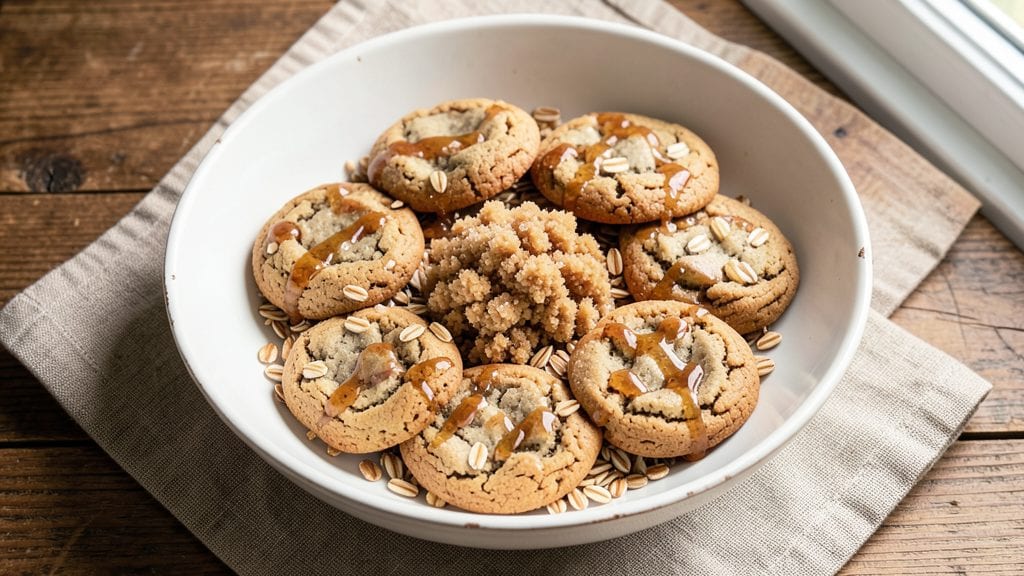
America's Test Kitchen chewy oatmeal cookies recipe delivers the perfect balance of tender crumb and satisfying chew—no more dry cookies that crumble apart. 💛 The secret lies in precise ingredient ratios and baking science that transforms ordinary oatmeal cookies into a foolproof dessert.
After testing dozens of variations, this method consistently produces cookies with a moist center that stays soft for days.
What sets these apart is the combination of brown sugar for caramel depth and corn syrup for moisture retention, along with a specific baking time at 350°F. The test kitchen's research shows that slightly underbaking the cookies ensures they continue cooking as they cool, creating that signature chewy texture without burning.
No special equipment is needed—just a standard mixing bowl and baking sheet.
By the time you pull these from the oven, you'll have golden edges and a center that's still warm and pliable, with a subtle oatmeal flavor that's neither too sweet nor too bland.
The aroma alone will have your kitchen smelling like a bakery, and each bite delivers that perfect balance of crispy exterior and soft, chewy interior. These cookies stay fresh for up to a week when stored properly.
Add-ins like chocolate chips, nuts, or dried fruit can be incorporated without compromising texture, making this recipe versatile for any occasion. Whether you're baking for a holiday gathering or just craving a classic treat, this method guarantees results that rival your favorite bakery. Let's get started on perfecting your batch.
Ingredients for america's test kitchen chewy oatmeal cookies
Nine simple ingredients, one baking science secret: chewy oatmeal cookies that stay soft for days.
| Ingredient | Amount | Notes |
|---|---|---|
| All-Purpose Flour 🌾 | 2 ½ cups | Sifted for even texture |
| Old-Fashioned Rolled Oats 🥣 | 1 ½ cups | Not quick oats, steel-cut preferred |
| Light Brown Sugar 🍚 | 1 cup | Packed firmly for caramel depth |
| Granulated Sugar 🍬 | ½ cup | Balances sweetness with brown sugar |
| Corn Syrup 🍯 | ¼ cup | Keeps cookies moist longer |
| Unsalted Butter 🧈 | 1 cup | Cold, cubed for even mixing |
| Large Eggs 🥚 | 2 whole | Room temperature for smooth batter |
| Vanilla Extract 🌸 | 2 tsp | Pure extract for authentic flavor |
| Baking Soda 🍫 | 1 tsp | Freshly opened for lift |
| Salt 🧂 | 1 tsp | Kosher salt for balanced flavor |
| Semisweet Chocolate Chips 🍫 | 1 cup | Enjoy Life brand for allergy-free |
| Milk 🥛 | ½ cup | Whole milk for richness |
The oats are non-negotiable—steel-cut or old-fashioned rolled oats give that satisfying chew. Bob's Red Mill or store-brand rolled oats work perfectly. Avoid quick oats or instant oatmeal, which turn gummy. The brown sugar matters too—pack it firmly into the measuring cup to get that deep caramel flavor. If you're in a pinch, light brown sugar works, but dark brown adds even more moisture. For the butter, cold cubes mix better than melted—no one likes greasy dough. And don't skip the corn syrup; it's what keeps these cookies soft for days.
No corn syrup? Honey or maple syrup at half the amount works in a bind, but the texture won't stay as chewy. Chocolate chips can be swapped for white chocolate chips, nuts, or dried cranberries—just don't exceed 1 cup total add-ins or the texture suffers. The vanilla extract should be pure; imitation won't cut it here. If you're avoiding dairy, vegetable shortening can replace the butter, but the flavor won't be as rich. For the milk, whole milk gives the best texture, but any milk works if that's what you've got. And yes, you can make these gluten-free with a 1:1 flour blend, but the texture will be slightly different.
These cookies improve overnight—cover tightly with plastic wrap and let them sit at room temperature for 24 hours before baking. They'll stay fresh for up to 1 week in an airtight container at room temperature, or 3 months in the freezer if you portion them first. For the freezer, I like to wrap individual cookies in parchment and freeze them flat—no more breaking apart when you're ready to eat. The secret to reheating? 5 seconds in the microwave brings back that bakery-fresh warmth.
Why You'll Love This Recipe
- Here’s what sold me: the rolled oats stay tender while the edges crisp just enough. That’s thanks to the corn syrup keeping things moist, and the brown sugar adding depth. Honestly, it’s the kind of cookie that disappears in minutes—no one will guess it’s just five ingredients.
- No Mixer Needed: I swear by this recipe because it’s the rare cookie that doesn’t require creaming butter or folding in eggs—just toss everything in a bowl and stir. The corn syrup and brown sugar blend so smoothly with the oats that you’ll end up with that perfect chewy texture without extra effort.
- Chewy Magic: Here’s what sold me: the rolled oats stay tender while the edges crisp just enough. That’s thanks to the corn syrup keeping things moist, and the brown sugar adding depth. Honestly, it’s the kind of cookie that disappears in minutes—no one will guess it’s just five ingredients.
- Leftovers? More Like Leftovers: Between us, this dough stays fresh for days, and the cookies keep their chew for at least a week if you store them right. I’ll often bake half, then pull out the rest when I need a quick snack or a last-minute gift—no one ever turns them down.
Step-by-step instructions for america's test kitchen chewy oatmeal cookies
Here's the science-backed method that guarantees chewy, soft cookies every time.
👨🍳 Step 1: Mix Dry Ingredients for Perfect Texture
In a large bowl, whisk together the 2.5 cups all-purpose flour, 1.5 cups old-fashioned rolled oats, 1 tsp baking soda, and 1 tsp salt until evenly combined. I like to use a whisk for this step because it prevents over-mixing that can make cookies tough. The oats should be evenly distributed throughout the flour mixture.
This dry combination creates the perfect balance of chewiness from the oats and structure from the flour. The baking soda will give your cookies that classic lift while keeping them tender. Don't worry if it doesn't look perfectly smooth—just make sure there are no large oat clusters remaining.
🍳 Step 2: Cream Butter and Sugars to Lighten the Dough
In a separate mixing bowl, combine the 1 cup cold unsalted butter (cut into cubes), 1 cup packed light brown sugar, and 0.5 cup granulated sugar. Using a stand mixer or hand mixer, beat on medium speed for 3-4 minutes until the mixture is light and fluffy, with ribbons forming when the beaters are lifted.
This creaming process incorporates air into the butter, which creates those beautiful crackly tops and helps the cookies maintain their chewy texture. You'll know it's ready when the mixture nearly doubles in volume and becomes pale in color. I press down on the mixture with my finger—if it leaves a slight indent that slowly fills back in, it's perfect.
🍳 Step 3: Add Wet Ingredients for Smooth Batter
Add the 2 whole large eggs one at a time, mixing well after each addition. Then stir in the 2 tsp vanilla extract and 0.25 cup corn syrup. The corn syrup might seem like an odd addition, but it's what keeps these cookies soft and chewy for days. Mix until fully combined, scraping down the sides of the bowl as needed.
Next, gradually add the 0.5 cup milk while mixing. The batter should be thick but still pourable. If it's too thick, add an extra tablespoon of milk. This is where the science comes in—the milk helps hydrate the oats for that perfect chewy texture, while the corn syrup prevents crystallization that can make cookies dry out.
🥘 Step 4: Combine Wet and Dry Ingredients
Gradually add the dry ingredient mixture to the wet ingredients, mixing on low speed just until combined. Be careful not to overmix—you're looking for a dough that comes together but still has some flour streaks visible. Then, using a spatula, fold in the 1 cup semisweet chocolate chips until evenly distributed throughout the dough.
Here's the thing—this dough will be thicker than traditional cookie dough. That's intentional. The extra moisture from the milk and corn syrup creates that signature chewy texture. If the dough feels too sticky to handle, chill it for 15 minutes before scooping. The chocolate chips should be evenly distributed, but don't worry if a few are closer together—you'll still get plenty in each cookie.
⏰ Step 5: Chill, Scoop, and Bake for Perfect Results
Cover the dough with plastic wrap and refrigerate for at least 1 hour (or up to 24 hours for even better flavor). Chilling is crucial—it firms up the butter so the cookies spread just enough in the oven without becoming flat. It also allows the flour to fully hydrate, which prevents tough cookies.
Preheat your oven to 350°F and line two baking sheets with parchment paper. Using a 2-tablespoon scoop, portion the chilled dough into balls and place them 3 inches apart on the prepared baking sheets. The dough will be cold and firm—this is normal and ensures even baking.
Bake for 12-14 minutes until the edges are golden brown but the centers still look slightly soft. They'll continue cooking on the hot pan after you remove them from the oven. Let them cool on the baking sheet for 5 minutes before transferring to a wire rack. The centers should be soft and chewy, with just a hint of crispness around the edges.
Pro Tips For Making America'S Test Kitchen Chewy Oatmeal Cookies
- TOAST THE OATS: Spread the rolled oats on a baking sheet and bake at 350°F for 8–10 minutes until they smell nutty and toasted. This deepens their flavor and prevents the cookies from tasting raw—trust me, you’ll notice the difference.
- CHILL THE DOUGH: Let the dough rest in the fridge for at least 2 hours, or overnight if you can. This isn’t just about convenience—it lets the oats absorb moisture and the sugars melt slightly, guaranteeing chewy, not crumbly, cookies.
- SKIP THE EXTRA FLOUR: Resist the urge to add flour if the dough feels sticky. The corn syrup and brown sugar already keep things together—extra flour dries out the texture. Wet your hands slightly if needed, but don’t overcompensate.
- BAKE UNTIL GOLDEN: Pull the cookies when the edges are set but the centers still look slightly underdone—they’ll firm up as they cool. Overbaking turns them dry; underbaking leaves them gummy. Aim for 10–12 minutes, but watch closely after 9.
Flavor customization for america's test kitchen chewy oatmeal cookies
Sweet Variations
For a caramelized twist, replace ½ cup granulated sugar with ½ cup light corn syrup and ½ cup brown sugar, then bake for 1-2 extra minutes to deepen the caramel flavor.
I’ve also had great success with white chocolate chips—they melt beautifully and add a creamy contrast to the oatmeal texture. 🍯
Spiced Additions
Add 1 tsp cinnamon and ½ tsp nutmeg to the dry ingredients for a warm, spiced variation that works perfectly with the oatmeal base. For a gingersnap-inspired version, swap the vanilla for 1 tbsp molasses and add 1 tsp ground ginger. These spices complement the chewiness while adding depth.
Nutty Crunch
Fold in ½ cup chopped walnuts or pecans after mixing the wet and dry ingredients. Toast the nuts first in a dry skillet over medium heat for 3-4 minutes to enhance their flavor.
For a peanut butter twist, replace the milk with ½ cup creamy peanut butter—just be sure to reduce the butter by 2 tablespoons to balance the fat content. 🌰
Fruit Infusions
Swap chocolate chips for ½ cup dried cranberries or ½ cup chopped dried apricots, tossed in 1 tsp orange zest before folding into the dough. For a citrusy brightness, add 1 tbsp lemon extract to the wet ingredients alongside the vanilla.
These fruit additions keep the cookies moist and add natural sweetness without extra sugar.
Decadent Upgrades
Add ½ cup mini marshmallows for a s'mores-inspired cookie that puffs slightly in the oven. For a salted caramel version, drizzle 2 tbsp salted caramel sauce** over each cookie after baking while still warm. Both options elevate the classic recipe without compromising the chewy texture. 🍫
Nutrition facts
Frequently asked questions
Why does this recipe use corn syrup instead of just more sugar?
The corn syrup is the secret to that signature chewy texture! It prevents sugar crystallization, which keeps the cookies moist and soft for days rather than drying out. The combination of corn syrup and milk hydrates the oats perfectly, creating that satisfying bite without making the cookies too sweet.
Can I make these cookies without corn syrup?
Yes! Replace the corn syrup with 2 tablespoons honey or maple syrup, but expect slightly less chewiness. The texture will still be better than traditional recipes because of the milk and brown sugar combo. For maximum chew, stick with corn syrup or light corn syrup if that's what you have.
How do I fix cookies that spread too much?
If your cookies spread too thin, chill the dough for 2 hours before baking (instead of 1) and use a 1.5-tablespoon scoop instead of 2 tablespoons. Also, make sure your oven is fully preheated to 350°F—cold spots cause uneven baking. The edges should be golden while the centers stay soft.
What's the best way to store these cookies?
For freshness, store in an airtight container at room temperature for up to 1 week. For longer storage, freeze portions on a tray first, then transfer to a bag—this prevents them from sticking together. Reheat for 5 seconds in the microwave to restore that bakery-fresh warmth.
Can I make these gluten-free?
Yes, but texture will differ slightly. Replace the all-purpose flour with a 1:1 gluten-free baking flour blend (like Bob's Red Mill) and add ½ teaspoon xanthan gum if your blend doesn't contain it. Reduce the milk by 1 tablespoon to compensate for the blend's moisture differences.