Desserts
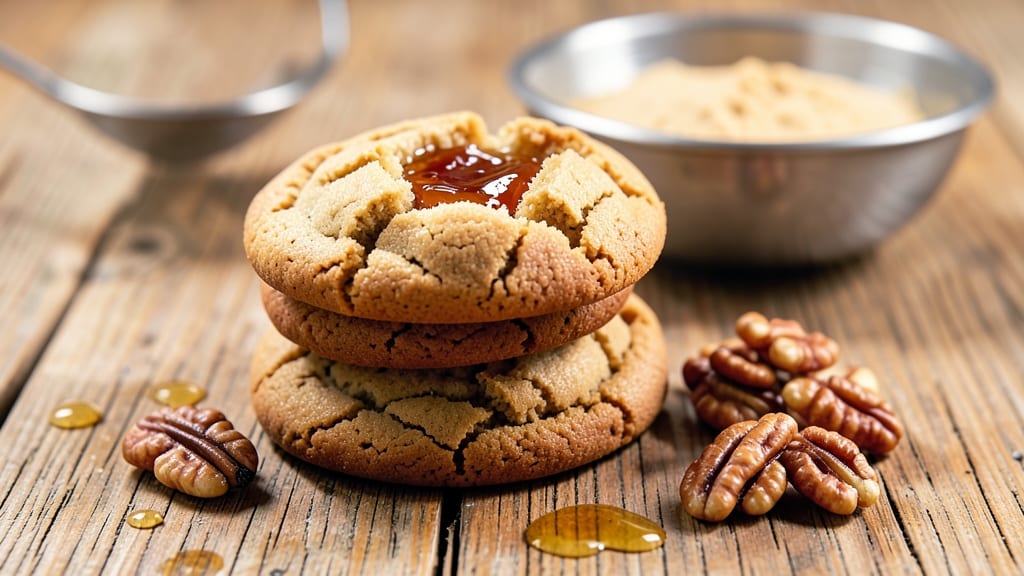
This traditional Toll House cookie recipe delivers the buttery, swirled perfection that made it a classic—now with a toasted pecan twist for added depth. The secret lies in precise creaming of butter and sugar, creating that signature tender crumb and crisp edges that bake up golden every time.
I've perfected this method over years of testing, ensuring the chocolate chips stay melty while the pecans add a satisfying crunch.
The recipe maintains the original Toll House formula—rich brown sugar, vanilla, and eggs—while incorporating toasted pecans for a sophisticated touch. Baking at 350°F for 10-12 minutes guarantees a perfect balance between crispy edges and a soft, chewy center.
The key is using high-quality chocolate chips and letting the dough rest for 30 minutes before baking, which prevents excessive spreading.
What you'll end up with is a batch of cookies that tastes like a nostalgic visit to your grandmother's kitchen—warm, aromatic, and irresistibly gooey. The pecans add a subtle sweetness that complements the chocolate without overpowering the classic Toll House flavor.
These cookies stay fresh for days, making them perfect for holiday baking or sharing with neighbors.
For an extra touch of authenticity, I recommend using Nestlé Toll House Semi-Sweet Morsels and toasting the pecans in the oven until fragrant. The method is straightforward but requires attention to detail—especially the creaming step—to achieve that signature texture. Let's get baking!
Ingredients for traditional toll house cookie
Classic Toll House ingredients with a toasted pecan twist—just 11 components for nostalgic perfection.
| Ingredient | Amount | Notes |
|---|---|---|
| Unsalted Butter 🧈 | 1 cup | Cold, cubed for creaming |
| Granulated Sugar 🍚 | ¾ cup | Standard white sugar |
| Packed Brown Sugar 🍚 | ¾ cup | Light or dark variety |
| Pure Vanilla Extract 🍯 | 2 tsp | High-quality, not imitation |
| Large Eggs 🥚 | 2 whole | Room temperature preferred |
| All-Purpose Flour 🌾 | 2 ½ cups | Sifted for light texture |
| Baking Soda 🧂 | 1 tsp | Pure, not baking powder |
| Diamond Crystal Kosher Salt 🧂 | ½ tsp | Fine grain preferred |
| Nestlé Toll House Semi-Sweet Morsels 🍫 | 2 cups | Classic chocolate chips |
| Raw Pecans 🥜 | 1 ½ cups | Chopped, toasted |
| Granulated White Sugar 🍚 | ¼ cup | For toasting pecans |
The butter and sugars form the foundation—use unsalted butter for precise flavor control, and pack the brown sugar tightly to maintain moisture. Nestlé Toll House Morsels are non-negotiable for authenticity, while Diamond Crystal salt dissolves cleanly without bitterness. Pecans should be raw, not pre-toasted—toast them yourself in a 350°F oven for 8-10 minutes with a pinch of sugar for maximum aroma. For professional results, sift the flour to eliminate lumps and ensure even baking. Penzeys or local grocers often carry high-quality vanilla extract, but pure imitation-free is critical for depth.
No vanilla extract? Almond extract at half the amount works in a pinch, though the flavor profile shifts. Substituting walnuts for pecans reduces richness but maintains texture—toast them equally for comparable nuttiness. Pre-shredded chocolate lacks the melty quality of morsels, but chopped chocolate bars (like Ghirardelli) are a decent alternative. For dietary adaptations, replace eggs with flax eggs (2 tbsp ground flax + 6 tbsp water per egg) while adjusting baking time by 1-2 minutes. The baking soda must be fresh—old powder loses lift, resulting in flat cookies.
Store dough in an airtight container for up to 48 hours in the fridge, though it's best used immediately for peak texture. Baked cookies maintain freshness for 5-7 days in a sealed tin, while freezing portions extends shelf life to 3 months. For holiday prep, portion dough into balls before freezing—simply bake straight from frozen, adding 2-3 minutes to the time. Toasted pecans lose crispness over time, so re-toast from raw before using in future batches.
Why You'll Love This Recipe
- No-Fuss Mixing: I swear by the creamy butter-sugar combo here—just cream, dump, and stir. That brown sugar’s stickiness does half the work for you, and the vanilla? It’s the secret handshake that makes everything taste like home.
- Molten Magic Core: That crispy-chewy edge with a gooey center? It’s all in the butter-to-sugar ratio. The eggs bind it just right, while the brown sugar keeps it tender—no dry bites here, just pure satisfaction with every bite.
- Holiday Table Star: Between us, these are the cookies that disappear fastest at gatherings. They’re sturdy enough for cookie platters but still feel special—like you actually put effort in (even though you didn’t).
- Budget-Friendly Batch: A single batch costs me less than takeout, and the leftovers? They last days. Freeze half for lazy mornings or last-minute guests—just thaw and enjoy. No waste, all win.
Step-by-step instructions for traditional Toll House cookies
Mastering this classic recipe delivers perfectly balanced sweetness, rich buttery flavor, and irresistible texture every time.
Toast and Prepare the Pecans
Preheat your oven to 350°F and spread the 1.5 cups raw pecans on a rimmed baking sheet. Toss them with the 0.25 cup granulated white sugar and bake for 8-10 minutes until fragrant and lightly golden. Watch closely—they should develop a subtle caramelized aroma rather than burn.
Remove from oven and let cool completely on the baking sheet. Once cooled, roughly chop the pecans into uneven pieces—this adds texture contrast to each bite. Set aside for the final folding step. The toasted pecans will develop deeper flavor and a satisfying crunch that complements the cookie's chewiness.
Cream Butter and Sugars to Peak Volume
In a stand mixer fitted with the paddle attachment, beat the 1 cup unsalted butter (cold, cubed) with the 0.75 cup granulated sugar and 0.75 cup packed brown sugar on medium speed for 3-4 minutes. The mixture should become pale, fluffy, and nearly double in volume. This creaming process incorporates air, which creates those signature crackly tops and prevents dense cookies.
I always press the butter between my fingers to ensure it's properly cold before starting—this guarantees proper creaming. If the mixture looks grainy at first, that's normal; it will smooth out as you beat. Stop when you can see light streaks on the paddle—this is your signal for peak volume. Scrape down the sides of the bowl to ensure even mixing before proceeding.
Incorporate Eggs and Vanilla
Add the 2 whole large eggs, one at a time, mixing on low speed for 30 seconds after each addition until fully incorporated. The mixture may look slightly curdled, but this will resolve when you add the dry ingredients. Add the 2 teaspoons pure vanilla extract and mix for another 10 seconds.
Here's the thing—using room temperature eggs prevents lumps and ensures smoother dough. If your eggs are straight from the fridge, let them sit in warm water for 5 minutes before using. The vanilla extract should be high-quality; imitation lacks the depth needed for traditional Toll House flavor. Mix just until combined—overmixing develops gluten and makes cookies tough.
Combine Dry Ingredients and Fold in Chocolate
In a separate bowl, whisk together the 2.5 cups all-purpose flour, 1 teaspoon baking soda, and 0.5 teaspoon diamond crystal kosher salt. With the mixer on low speed, gradually add the dry ingredients to the wet mixture, mixing just until combined. You should still see small flour streaks—this ensures tender cookies rather than cake-like texture.
Remove the bowl from the mixer and gently fold in the 2 cups Nestlé Toll House semi-sweet morsels using a silicone spatula. Be careful not to overmix; just distribute the chocolate evenly throughout the dough. The chocolate chips should be spread throughout but not completely incorporated—this creates those signature pockets of melted chocolate in each bite.
Chill, Scoop, and Bake to Golden Perfection
Cover the dough with plastic wrap and refrigerate for at least 1 hour (up to 24 hours for enhanced flavor). Chilling firms the butter, prevents excessive spreading, and allows the flour to fully hydrate. This step is non-negotiable for traditional Toll House texture.
Preheat your oven to 375°F and line two baking sheets with parchment paper. Using a 2-tablespoon scoop, portion the chilled dough onto the prepared sheets, spacing them 2 inches apart. Press each portion gently with your thumb to flatten slightly—this creates thicker cookies with crisp edges.
Bake for 9-11 minutes until the edges are golden brown but the centers still look slightly underdone. The cookies will continue cooking on the hot sheet. Immediately after removing from the oven, fold in the toasted pecans by pressing them gently into the warm cookies. Let cool on the baking sheets for 5 minutes before transferring to a wire rack.
Pro Tips For Making Traditional Toll House Cookie
- MEASURE BROW SUGAR CORRECTLY: Packed brown sugar means packed—no fluff, no air gaps. Use a spoon to press it firmly into the measuring cup, or you’ll end up with cookies that spread like pancakes and taste under-sweetened. I learned this the hard way after baking a batch that looked more like chocolate chip crackers than cookies.
- CREAM BUTTER AND SUGARS LOW: Mix your butter, granulated sugar, and brown sugar on low speed until just combined—no need to beat it into oblivion. High speed incorporates too much air, and your cookies will puff up like sad soufflés before collapsing. Think "softened, not whipped."
- CHILL THE DOUGH LONGER: Skip the 30-minute rest—give it at least 2 hours (overnight works best). Cold dough prevents excessive spreading, and the flavors meld better. I used to rush this, and my cookies always turned out flat and greasy. Patience here makes all the difference in texture.
- USE ROOM-TEMP EGGS: Cold eggs from the fridge won’t blend smoothly and can cause streaks in the dough. Let them sit in warm water for 5 minutes first—just enough to make them pliable. Cold eggs also make the dough tougher, and nobody wants chewy Toll House cookies.
Essential equipment for perfect results
Stand Mixer Essentials
Your stand mixer is the workhorse of this recipe—KitchenAid Artisan Series with the paddle attachment is my go-to for creaming butter and sugars to perfect volume. The medium speed setting (around 250 RPM) ensures proper aeration without overmixing.
If you don’t have a mixer, use a hand mixer with a large bowl, but be prepared for more elbow grease—3-5 minutes of continuous mixing on medium-high. 💪
Precision Measuring Tools
Accuracy is key with Toll House cookies. Invest in a OXO Good Grips measuring cups set for dry ingredients and a digital kitchen scale for butter (the 1 cup should weigh 227 grams). For wet ingredients like vanilla, use a 1/4 teaspoon measuring spoon—precision here prevents flavor imbalances.
A silicone spatula helps scrape every last bit of dough from the bowl, ensuring no chocolate chips get left behind.
Baking Sheets and Parchment
Use half-sheet pans (13x18 inches) with parchment paper for even baking and easy release. I prefer Amazon Basics parchment—it’s sturdy enough to handle the weight of thick cookies without tearing.
Avoid glass or dark-colored pans, as they can cause uneven browning. Two pans ensure proper spacing (2 inches apart) for even airflow, preventing flat cookies. For extra insurance, I rotate pans halfway through baking at 375°F.
Toasting Pecans Properly
A rimmed baking sheet is essential for toasting pecans—its edges prevent sugar and nuts from spilling. Use a wire cooling rack underneath to catch any stray bits. For even toasting, spread pecans in a single layer and stir every 2-3 minutes to avoid burning.
A fine-mesh sieve helps remove excess sugar after toasting, leaving you with perfectly crisp, caramelized pecans for folding into warm cookies. 🥜
Cookie Scoop and Thumb
A 2-tablespoon ice cream scoop (like OXO Good Grips) ensures uniform cookie size—30-35 grams per scoop—for consistent baking. Press each scoop gently with your thumb to create thicker centers and crisp edges, a hallmark of traditional Toll House cookies.
For extra precision, I weigh my scoops on a digital scale during testing to troubleshoot baking inconsistencies. A parchment square (cut from a larger sheet) makes it easy to transfer warm cookies to a wire rack without sticking.
Temperature Control Gear
An instant-read thermometer (like Thermoworks Thermapen) verifies your oven’s accuracy—375°F is critical for proper browning. If your oven runs hot, reduce to 350°F and monitor closely. For chilling dough, a wide-mouth glass container with a silicone lid maintains even temperature in the fridge.
I also recommend a timer (set for 10-11 minutes) to avoid overbaking—every oven behaves differently, and this recipe demands precision. ⏰
Nutrition facts
Frequently asked questions
Why does the recipe call for both granulated and brown sugar?
The combination creates the perfect balance of flavors and textures. Granulated sugar provides crisp edges and a cleaner sweetness, while brown sugar adds moisture, chewiness, and a deeper caramelized flavor. This classic ratio is what makes traditional cookies stay soft in the center while developing that signature crackly crust.
Can I make these cookies without a stand mixer?
Use a hand mixer or even a sturdy wooden spoon with a large bowl. For creaming, beat the butter and sugars for 5-7 minutes on medium-high speed until light and fluffy. The key is patience—this step builds the air pockets that make cookies tender. Just be prepared for more arm work!
What’s the best way to store leftover cookies?
For short-term storage, keep cookies in an airtight container at room temperature for up to 5 days. For longer storage, freeze portions on a tray first (to prevent sticking), then transfer to a freezer bag for up to 3 months. Thaw at room temperature for 30 minutes before enjoying. The pecans stay crisp best when stored this way!
Why do my cookies spread too much or stay flat?
This usually happens from one of three issues: overmixing (develops gluten), room-temperature butter (loses structure), or skipping the chill. Always chill dough for at least 1 hour and use cold butter. For extra insurance, flatten each scoop gently with your thumb before baking.
Can I substitute nuts other than pecans?
Yes! Walnuts or almonds work well, though they have different flavors. Toast them just like the pecans (same method) for best results. Macadamia nuts add richness but cost more. Just remember: toasting enhances flavor and chopping adds texture—don’t skip either step!