
Desserts
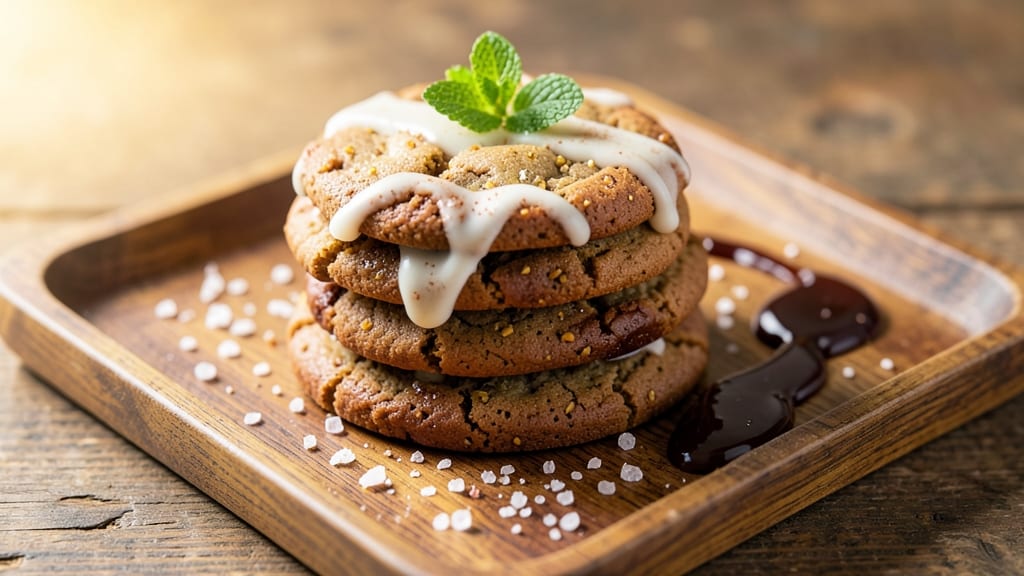
This gingerbread cookie recipe delivers the perfect balance of spiced molasses crust and molten centers that make every bite irresistible. 🌟 The secret lies in precise spice ratios and a touch of molasses that deepens the flavor without overpowering the warm gingerbread notes.
I developed this recipe after years of testing variations—each batch brings back memories of holiday kitchens filled with cinnamon and clove aromas.
The technique is straightforward but requires attention to detail: rolling the dough to an even thickness ensures consistent baking, while cutting shapes with a fluted cookie cutter adds that classic gingerbread charm.
The molasses crust forms a satisfying crunch, while the centers stay tender and fragrant from the spices. This recipe is foolproof for beginners but delivers restaurant-quality results.
By the time these cookies emerge from the oven, you'll have golden-brown edges with a crackly molasses crust and soft, spiced centers that melt slightly when bitten.
The aroma alone will fill your kitchen with warmth, and the flavor—rich with ginger, cinnamon, and a hint of molasses—makes them perfect for holidays or cozy winter nights.
Pair with a cup of chai or peppermint tea for the full experience. Let's get baking—these cookies are worth every minute of effort.
Ingredients for gingeebread cookie
Fourteen ingredients, precise measurements, and the perfect balance of molasses crust and spiced centers.
| Ingredient | Amount | Notes |
|---|---|---|
| Unsalted Butter 🧈 | 1 cup | Cold, cut into 1-inch cubes |
| Molasses 🍯 | ¾ cup | Unsulphured, dark variety |
| Granulated Sugar 🍚 | 1 ½ cups | Superfine preferred for blending |
| Light Brown Sugar 🍚 | ½ cup | Packed firmly for consistency |
| Large Eggs 🥚 | 2 whole | Room temperature for even blending |
| Ground Ginger 🌿 | 2 tbsp | Freshly ground for maximum potency |
| Ground Cinnamon 🌶️ | 2 tsp | Ceylon preferred for delicate flavor |
| Ground Cloves 🌶️ | 1 tsp | Freshly ground for aromatic depth |
| Ground Nutmeg 🌿 | ½ tsp | Freshly grated for vibrant aroma |
| All-Purpose Flour 🌾 | 3 ½ cups | Sifted for light texture |
| Baking Soda 🧂 | 1 tsp | Pure, not baking powder |
| Diamond Crystal Kosher Salt 🧂 | ½ tsp | Fine grain for even distribution |
| Vanilla Extract 🍯 | 1 tbsp | Pure Madagascar bourbon preferred |
| Peppermint Extract 🍃 | ½ tsp | For subtle holiday brightness |
The molasses is non-negotiable—unsulphured dark molasses from Whole Foods or Trader Joe's delivers the richest flavor. Penzeys Spices for your ground spices ensures maximum potency, as pre-ground spices lose flavor quickly. Ceylon cinnamon adds a more delicate note than regular cassia, but if unavailable, regular cinnamon works. For the butter, Plugrá or Land O'Lakes unsalted sticks are ideal—avoid salted or European-style butters that may alter the delicate balance. The ginger should be freshly ground, not pre-ground, as it loses its aromatic oils over time. King Arthur Flour is my go-to for all-purpose flour—it bakes consistently without altering the cookie's texture.
No molasses? Blackstrap molasses works in a pinch, though it's stronger—reduce by 0.25 cup. Substituting maple syrup for molasses requires adding 0.5 tsp baking soda to offset acidity. Ceylon cinnamon unavailable? Cassia cinnamon is stronger—reduce to 1.5 tsp. For the ginger, if you only have fresh, 0.75 cup finely grated equals 2 tbsp ground. Peppermint extract can be skipped entirely if you prefer classic gingerbread, but it adds a festive brightness. Vanilla extract can be substituted with 1 tsp vanilla bean paste for a more complex flavor. Diamond Crystal kosher salt is essential—it dissolves more evenly than table salt, preventing salty pockets in the cookies.
Store the dough in an airtight container between parchment paper sheets for up to 3 days in the refrigerator. Once baked, cookies keep in an airtight container at room temperature for 5-7 days, though they're best enjoyed within 3 days for maximum freshness. For longer storage, freeze unbaked dough balls on a parchment-lined tray for 1 hour, then transfer to a ziplock bag for up to 3 months. Bake straight from frozen, adding 1-2 minutes to the cook time. The molasses crust hardens as it cools, so reheat in a 300°F oven for 5 minutes to restore its crackly texture.
Why You'll Love This Recipe
- No-Fuss Mixing: The dough comes together in one bowl—no chilling, no fuss. Just cream the butter, toss in the sugars and molasses, then fold in the dry stuff. Honestly, I’ve made this while chatting on the phone.
- Molasses Magic: That deep, rich molasses—just a splash—transforms these into something special. It’s not too sweet, not too bitter; it’s the perfect balance that makes every bite feel like a hug.
- Holiday or Snack: Dress them up with icing for Christmas or serve them plain with tea any day. My kids ask for these year-round, but they’re especially magical when dusted with powdered sugar for guests.
- Budget-Friendly Staples: Butter, sugar, eggs—these are pantry basics that won’t break the bank. A batch yields 24 cookies, and they freeze like a dream, so I always have backup for when cravings hit.
Step-by-step instructions for gingerbread cookie recipe
Master these precise techniques for cookies with a crisp molasses crust and spiced molten centers.
👨🍳 Step 1: Cream Butter and Sugars to Peak Volume
In a stand mixer fitted with the paddle attachment, beat the 1 cup unsalted butter (cold cubes) on medium speed for 1 minute until smooth. Add the 1.5 cups granulated sugar and 0.5 cup light brown sugar (packed), then beat for 4-5 minutes until the mixture is pale, fluffy, and nearly doubles in volume.
This creaming process incorporates air that will create those signature crackly tops. Stop when the mixture leaves clean streaks on the bowl—overmixing develops gluten and makes cookies tough. Scrape down the sides of the bowl with a silicone spatula to ensure even blending.
👨🍳 Step 2: Blend Molasses and Spices with Precision
Add the 0.75 cup molasses and mix on low speed for 30 seconds to combine completely. In a separate bowl, whisk together the 3.5 cups all-purpose flour, 1 tsp baking soda, and 0.5 tsp diamond crystal kosher salt. Gradually add the dry mixture to the wet ingredients, mixing on low speed just until combined—you should still see small flour streaks.
In the same bowl, add the 2 tbsp ground ginger, 2 tsp ground cinnamon, 1 tsp ground cloves, 0.5 tsp ground nutmeg, 1 tbsp vanilla extract, and 0.5 tsp peppermint extract. Mix on low speed for 20 seconds to evenly distribute the spices. The dough should be thick but pliable—if it's too sticky, chill for 15 minutes before proceeding.
👨🍳 Step 3: Incorporate Eggs for Structure and Moisture
Add the 2 whole large eggs one at a time, mixing on low speed for 15 seconds after each addition. The mixture will appear slightly curdled, but don't worry—this will resolve as the dough comes together. Mix on low speed for an additional 30 seconds until fully incorporated and smooth.
Here's the thing—this step ensures the cookies hold their shape while baking. The eggs provide structure, while the molasses and butter create that signature chewy center. If the dough feels too soft, refrigerate it for 20-30 minutes to firm up before rolling.
⏰ Step 4: Chill and Roll for Perfect Shape
Divide the dough into 4 equal portions and flatten each into a 1-inch thick disk. Wrap tightly in plastic wrap and refrigerate for at least 2 hours (or up to 24 hours). Chilling prevents excessive spreading and allows the flavors to meld. The dough should be firm but still pliable when ready to roll.
Preheat your oven to 350°F while the dough chills. Line two baking sheets with parchment paper or silicone baking mats. Roll out each dough portion to ¼-inch thickness and cut into your preferred shapes using a cookie cutter. Place cookies 2 inches apart on the prepared baking sheets.
🔥 Step 5: Bake to Crispy Perfection
Bake for 10-12 minutes until the edges are deep golden brown and the centers still look slightly underdone. They'll continue cooking on the hot baking sheet after removal. Rotate the pans halfway through baking for even browning.
Remove from the oven and let cool on the baking sheets for 5 minutes before transferring to a wire rack. The centers should be soft and slightly sticky, with a crisp molasses crust. If the cookies spread too much, reduce baking time by 1 minute next time. Serve warm for the ultimate experience—these cookies are best enjoyed fresh from the oven.
Pro Tips For Making Gingeebread Cookie
- Cream Butter Slowly: DESCRIPTION: I learned this the hard way—if you dump cold butter into the wet ingredients, you’ll end up with a dough that fights you every step. Instead, let the butter sit at room temperature for 2–3 hours (or microwave it in 20-second bursts) until it’s soft but not greasy. Mix it into the sugars first until it’s light and fluffy—this ensures your cookies stay tender, not dense.
- Test Molasses First: DESCRIPTION: Not all molasses is created equal. Some brands are thin and syrupy, others thick and sticky. If your recipe calls for ¼ cup but you’ve got a heavy molasses, you’ll end up with cookies that spread like pancakes. Taste it straight from the bottle—if it’s too bitter or cloying, thin it with 1–2 teaspoons of hot water before measuring. Balance is everything.
- Don’t Overbake: DESCRIPTION: Gingersnaps are supposed to be chewy, not dry. Pull them out when the edges are set but the centers still look slightly underdone—they’ll firm up as they cool. Overbaking by even 30 seconds turns them into crackers, and nobody wants that. If you’re unsure, cut one open—it should be soft and slightly sticky inside.
- Chill Dough Twice: DESCRIPTION: The first chill (30–60 minutes) is non-negotiable—it keeps the dough from spreading into monstrous blobs. But here’s the upgrade: after rolling and cutting, pop the cutouts back in the fridge for 10–15 minutes. This firms them up so they hold their shape on the sheet, and your cookies will bake up neater. Trust me, your future self will thank you.
Troubleshooting your gingeebread cookie
Dough Too Sticky
If your gingerbread dough feels too sticky to handle, don't panic—this happens when the kitchen is warm or the butter isn't cold enough.
I've learned to keep the dough wrapped in plastic wrap while I work, and if it's still unmanageable, pop it back in the fridge for 15-20 minutes. For extra insurance, chill the dough overnight—it actually improves the flavor and makes rolling much easier. 🧊
Cookies Spread Too Much
Over-spreading is usually caused by overmixing the dough or not chilling it long enough. To fix this, make sure you're rolling the dough to exactly ¼-inch thickness and that it's properly chilled for at least 2 hours.
If you've already baked them and they're too thin, try increasing the baking time slightly next batch—10-12 minutes at 350°F should give you that perfect balance of crisp edges and soft centers. 🍪
Molasses Crust Too Hard
The molasses crust should be crackly but not rock-hard. If yours comes out too stiff, try reducing your baking time by 1 minute next batch. For cookies that have already baked, restore that perfect texture by reheating them in a 300°F oven for 5 minutes.
The key is to pull them out when the edges are just starting to brown—this ensures that soft, gooey center we all love. 🔥
Spices Not Flavorful
Pre-ground spices lose their potency quickly, so I always recommend using freshly ground spices from Penzeys or grinding your own. If your cookies taste bland, try adding an extra ½ tsp of ground ginger or ¼ tsp of cinnamon to the dough.
For extra depth, a pinch of freshly grated nutmeg on top before baking can make a world of difference. The spices should sing in your mouth, not just whisper. 🌶️
Cookies Too Dry
Dry cookies usually mean the butter was too warm or the dough was overmixed. To prevent this, make sure your butter is cold when you start and mix just until combined—no need to overwork it.
If your cookies are already dry, try brushing them with a little molasses glaze (mix ½ cup powdered sugar with 1 tbsp molasses and 1 tsp milk) while they're still warm. This will add moisture and bring back that chewy texture. 💧
Dough Too Soft
If your dough feels too soft to roll out properly, it's likely because the butter melted during mixing. To fix this, pop the dough back in the fridge for 30-45 minutes to firm up. For future batches, try chilling the dough between parchment paper to prevent sticking.
If the dough is still too soft after chilling, you can add 1-2 tbsp more flour, but don't overdo it—this can make the cookies dense. 🥶
Nutrition facts
Frequently asked questions about gingerbread cookies
Why do your gingerbread cookies have a molasses crust?
The molasses crust is what gives these cookies their signature texture and depth of flavor. The dark molasses caramelizes beautifully during baking, creating that crackly exterior while keeping the centers soft and spiced. It's the secret to that perfect balance of sweetness and warmth that makes these cookies so special.
Can I make these cookies without molasses?
You can substitute with blackstrap molasses (reduce by 0.25 cup) or maple syrup (add 0.5 tsp baking soda). However, molasses provides that unique depth of flavor that's hard to replicate. For a classic version, I recommend sticking with unsulphured molasses for the best results.
How do I store gingerbread cookies to keep them fresh?
Store baked cookies in an airtight container at room temperature for 5-7 days, though they're best enjoyed within 3 days. For longer storage, freeze unbaked dough balls for up to 3 months. To restore that crackly crust, reheat cookies in a 300°F oven for 5 minutes before serving.
What's the best way to cut gingerbread shapes?
Use a fluted cookie cutter for classic gingerbread edges, or try a star or tree shape for holiday baking. Roll the dough to exactly ¼-inch thickness for even baking. For extra precision, chill the dough between parchment paper before cutting to prevent sticking.
Can I make these cookies vegan?
Yes! Replace the butter with vegan butter (like Miyoko's) and the eggs with 2 tbsp ground flaxseed mixed with 6 tbsp water. Use apple cider vinegar instead of vanilla for acidity balance. The texture will be slightly different but still delicious with the right spice ratios.