Breakfast & Brunch
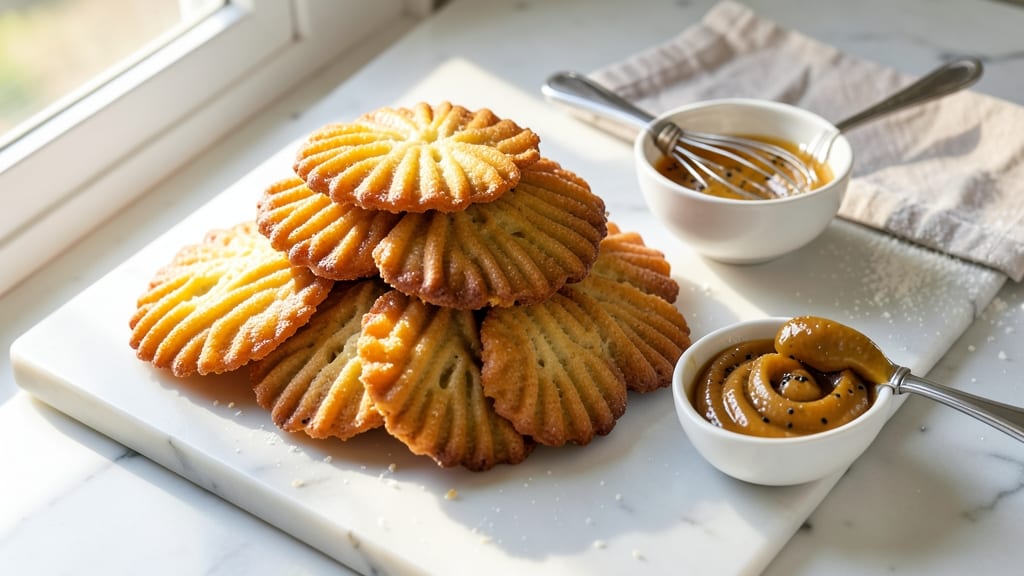
This French palmier cookies recipe delivers the signature buttery layers and delicate texture that make them irresistible. ✨ The key to perfect palmier cookies lies in precise butter-to-flour ratios and gentle rolling to create those signature "palm tree" ridges—every bite should shatter with crisp, flaky perfection.
Unlike many French pastries, palmier cookies require no yeast or complicated techniques—just a few simple ingredients and careful handling. The dough comes together quickly, and the shaping process is where the magic happens, transforming a simple rectangle into elegant, leaf-like cookies with minimal effort.
What you'll achieve is a batch of golden, buttery cookies with crisp edges and tender centers, their signature ridges catching light beautifully. The aroma alone will fill your kitchen with warmth, while the texture provides that satisfying contrast between crisp and melt-in-your-mouth layers.
These cookies are perfect for breakfast with coffee, afternoon tea, or as a delicate dessert option. The recipe yields about 24 cookies, making them ideal for sharing or gifting. Let's create these elegant French treats that look as impressive as they taste.
Ingredients for french palmier cookies
Nine simple ingredients transform into delicate, shattering palmier cookies with crisp ridges.
| Ingredient | Amount | Notes |
|---|---|---|
| Unsalted Butter 🧈 | 1 cup | Cold, cubed for even mixing |
| All-Purpose Flour 🌾 | 2 ½ cups | Sifted for light texture |
| Granulated Sugar 🍚 | ½ cup | Fine grain preferred |
| Vanilla Extract 🌸 | 1 tsp | Pure vanilla preferred |
| Large Eggs 🥚 | 1 whole | Room temperature |
| Salt 🧂 | ¼ tsp | Fine sea salt |
| Powdered Sugar 🍚 | ¼ cup | For dusting |
| Cornstarch 🌾 | 1 tbsp | For tender texture |
| Almond Extract 🌿 | ½ tsp | Optional, for depth |
The butter is non-negotiable—use European-style if possible, like Plugrá or Miyoko's, for superior flavor and texture. Most grocery stores carry it, but check the baking aisle near the butter. Cold butter cubes are essential; they create those signature flaky layers. If you can't find European-style, high-fat American butter (82% fat or higher) works too. Avoid margarine or low-fat spreads—they lack the necessary fat content for proper layering. Sift the flour with the cornstarch together to avoid lumps, which can disrupt the delicate texture of these cookies.
No almond extract? Skip it or use vanilla extract only—the flavor won't be compromised. Running short on powdered sugar? Granulated sugar processed in a blender or food processor works in a pinch. If you've got vanilla bean paste, use half the amount of vanilla extract. The egg should be at room temperature—this ensures even mixing and prevents tough cookies. For a nut-free option, omit the almond extract entirely. The dough is delicate, so handle it gently to avoid overworking, which can lead to dense cookies instead of the desired crisp, shatter-prone texture.
Store the dough in an airtight container in the fridge for up to 3 days—it actually improves as it rests. Once shaped, the cookies keep at room temperature for 2 days in an airtight container, though they're best enjoyed fresh. For longer storage, freeze the shaped cookies on a tray before transferring to a bag for up to 1 month. Reheat in a 300°F oven for 3-5 minutes to restore crispness. These cookies also make a stunning gift—package them in a decorative tin with a dusting of powdered sugar.
Why You'll Love This Recipe
- Here’s what sold me: these are my go-to for holidays, coffee dates, or when I need to impress someone without stressing. They’re elegant enough for a fancy spread but unfussy enough to bake on a Tuesday. Plus, they travel well—no crumbs, no mess.
- Five-Ingredient Magic: I swear by this recipe—just butter, flour, sugar, vanilla, and eggs. That’s it. No fancy substitutions, no hidden pantry raids. The dough comes together faster than you can cream butter and sugar (which, between us, is basically instant).
- Buttery Crunch Perfection: Honestly, the moment those cookies hit the oven and puff into those golden, caramelized layers? It’s like biting into a hug. The outside’s crisp, the inside’s soft, and the vanilla ties it all together—no artificial flavors here, just pure, warm sweetness.
- Party in a Box: Here’s what sold me: these are my go-to for holidays, coffee dates, or when I need to impress someone without stressing. They’re elegant enough for a fancy spread but unfussy enough to bake on a Tuesday. Plus, they travel well—no crumbs, no mess.
Step-by-step instructions for French palmier cookies
Master the art of these delicate cookies with crisp, buttery layers that separate effortlessly.
👨🍳 Step 1: Prepare the Dough with Cold Butter
In a stand mixer fitted with the paddle attachment, combine the 1 cup unsalted butter (cold and cubed) with the 0.5 cup granulated sugar. Beat on medium speed for 2-3 minutes until the mixture becomes light and fluffy. The butter should be fully incorporated but still maintain small, pea-sized pieces—this creates those signature layers.
Add the 1 whole large egg and mix for another 1 minute until fully combined. Here's the thing—don't overmix. You're looking for a smooth dough that just comes together. Scrape down the sides of the bowl as needed to ensure even mixing. Add the 1 tsp vanilla extract and 0.5 tsp almond extract (if using) and mix for 30 seconds until evenly distributed.
👨🍳 Step 2: Combine Dry Ingredients for Perfect Texture
In a separate bowl, whisk together the 2.5 cups all-purpose flour, 1 tbsp cornstarch, and 0.25 tsp salt. Sift the mixture directly into the mixer bowl with the wet ingredients. Mix on low speed for 30-45 seconds until just combined—you should still see small flour streaks. Overmixing develops gluten, which makes the cookies tough instead of delicate.
This is where the magic happens: the cornstarch creates that signature tender crumb while maintaining structure. The flour should be evenly distributed, but don't worry if it looks slightly uneven. The cold butter pieces will help create those beautiful layers when we roll and cut the dough.
⏰ Step 3: Chill the Dough for Easier Handling
Divide the dough into two equal portions and flatten each into a 6-inch circle about ¼-inch thick. Wrap each portion tightly in plastic wrap and refrigerate for at least 2 hours (or up to 24 hours). Chilling firms up the butter, making it easier to roll thin and preventing excessive spreading during baking.
I know it seems counterintuitive to wait, but this step is non-negotiable. The longer you chill, the more pronounced those buttery layers become. If you're short on time, you can chill for 1 hour in the freezer, but don't skip this step entirely—it makes all the difference in the final texture.
🔪 Step 4: Roll and Cut for Signature Layers
Preheat your oven to 350°F and line two baking sheets with parchment paper. On a lightly floured surface, roll out one chilled dough portion to about ⅛-inch thickness. Use a sharp knife or pizza cutter to cut the dough into ¼-inch strips, working quickly so the dough doesn't warm up.
Here's the crucial part: stack the strips in overlapping rows on the prepared baking sheets, leaving about 1 inch between each strip. The overlapping creates those beautiful, shatterable layers when baked. Repeat with the second dough portion. Bake for 12-14 minutes until the edges are light golden brown and the centers still look slightly pale.
🍽️ Step 5: Dust and Serve Immediately
Remove the cookies from the oven and immediately dust generously with the 0.25 cup powdered sugar using a fine-mesh sieve. The powdered sugar should cling to the edges, creating that signature appearance. Let the cookies cool on the baking sheets for 5 minutes before transferring to a wire rack to cool completely.
Serve these delicate cookies warm for the ultimate experience—the layers should separate easily with just a gentle touch. They're perfect with a cup of coffee or tea, and the buttery flavor shines through with each delicate bite. Store in an airtight container at room temperature for up to 5 days, though they rarely last that long in my kitchen!
Pro Tips For Making French Palmier Cookies
- Chill the Dough: After mixing, pop the dough in the fridge for at least 30 minutes—no, don’t skip this. I learned this the hard way when my first batch spread like wet sand and lost its shape. Cold dough holds together better and gives you those clean, fan-like layers.
- Use Cold Butter: Cut that unsalted butter straight from the fridge into cubes—no softening it first. Cold butter creates flaky layers when baked, while softened butter makes the cookies dense. (Yes, even if you’re impatient like me.)
- Don’t Overwork the Dough: Mix just until the flour disappears—overmixing turns palmier into tough, chewy cookies. Stop when it’s shaggy, not smooth. My grandmother swore by this, and she was right: less handling means more delicate texture.
- Roll Thin and Even: Aim for ⅛-inch thickness—any thicker, and the edges won’t crisp properly. Use a ruler to check; uneven rolling means some cookies bake faster than others. (Your future self will thank you.)
Best sauces and condiments for this french palmier cookies
Classic Vanilla Bean Glaze
A simple vanilla bean glaze elevates these delicate cookies by adding a luxurious touch. Whisk together ½ cup powdered sugar, 1 tbsp heavy cream, and ½ tsp vanilla bean paste until smooth.
Drizzle over cooled cookies just before serving—it adds moisture and a subtle floral aroma that complements the buttery flavor. 🌸
Lemon Zest Infusion
Brighten the flavor profile with a zesty twist by adding 1 tsp lemon zest to the dough during mixing. For an extra touch, create a quick lemon syrup by simmering 2 tbsp sugar with 1 tbsp water and 1 tsp lemon juice until dissolved.
Brush over warm cookies before dusting with powdered sugar. This balances the richness with a refreshing citrus note.
Chocolate Ganache Drizzle
For chocolate lovers, prepare a quick dark chocolate ganache by melting ½ cup dark chocolate chips with 2 tbsp heavy cream. Let it cool slightly, then drizzle over the cookies in a zigzag pattern.
The contrast between the crisp palmier and smooth chocolate creates a decadent bite. Use 60-70% cacao chocolate for a balanced sweetness.
Spiced Caramel Dip
Create a warm caramel dip** by melting ½ cup caramel sauce with ¼ tsp cinnamon and pinch of sea salt. Serve in small bowls alongside the cookies for dipping. The salted caramel enhances the buttery layers while adding a cozy, comforting element—perfect for pairing with coffee or tea. 🍯
Citrus Curd Swirl
Add a tangy dimension by swirling orange or lemon curd between the cookie layers before baking. Spread a thin layer of store-bought or homemade curd over the stacked strips before the final bake.
The citrus curd adds moisture and a vibrant pop of color, making these cookies visually stunning and flavorfully complex.
Honey Butter Spread
For a post-bake enhancement, mix 2 tbsp softened butter with 1 tbsp honey and a pinch of salt. Spread a thin layer on warm cookies before dusting with powdered sugar.
The honey adds natural sweetness and a slight floral note that pairs beautifully with the vanilla and butter. This works especially well if you prefer a less sweet finish.
Nutrition facts
Frequently asked questions
Why do French palmier cookies have those signature ridges?
The ridges form when you stack the thin strips of dough in overlapping rows before baking. This creates the signature "palm tree" pattern that shatters beautifully when you bite them. The overlapping also helps maintain the delicate layers that make them so crisp and buttery.
Can I make these cookies without a stand mixer?
Use a hand mixer or even a wooden spoon to combine the butter and sugar. Just be patient and mix until the butter is fully incorporated but still maintains small pieces. The key is gentle handling to avoid overworking the dough.
How do I prevent my palmier cookies from spreading too much?
Chill the dough for at least 2 hours before rolling—this firms up the butter and prevents excessive spreading. Also, roll the dough to ⅛-inch thickness and avoid warming it up during the process. Bake at 350°F for 12-14 minutes until just golden.
What's the best way to store these delicate cookies?
Keep them in an airtight container at room temperature for up to 5 days. For longer storage, freeze the shaped cookies on a tray before transferring to a bag for up to 1 month. Reheat in a 300°F oven for 3-5 minutes to restore crispness.
Can I add nuts or chocolate chips to the dough?
These cookies rely on their delicate, buttery texture—adding mix-ins like nuts or chocolate chips can make them dense. For a variation, try adding 1 tsp lemon zest or a citrus curd swirl between layers instead. The flavor should remain light and airy.