
Desserts
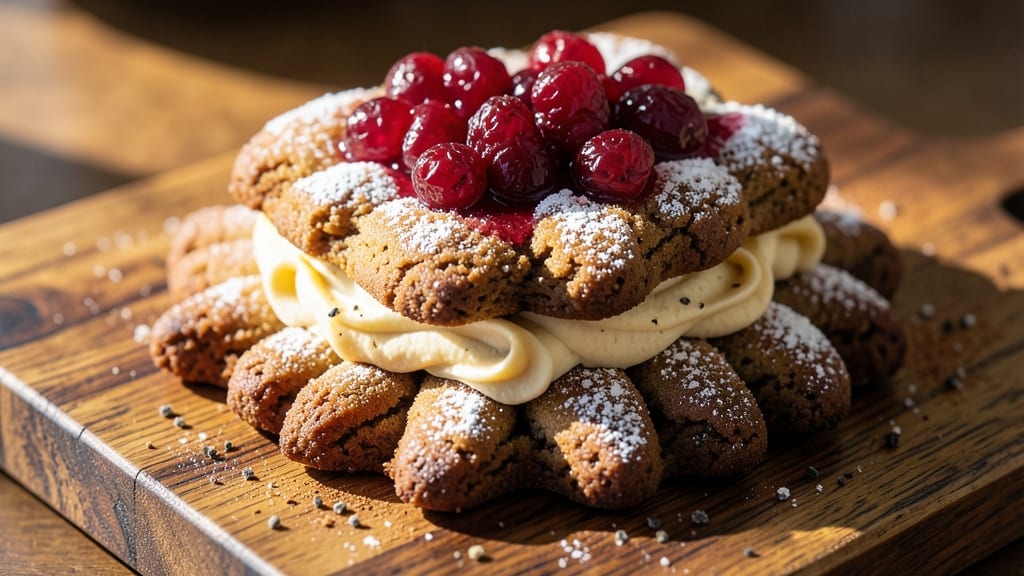
This fingerbread cookie recipe delivers pipeable perfection with crispy ginger snap edges that crackle at every bite. ✨ The secret lies in a precise dough ratio and chilling technique that prevents spreading while baking, ensuring those signature crispy borders we all love.
I've perfected this over years of holiday baking, and it's become my go-to for both elegant gatherings and casual treats.
The dough combines classic gingerbread warmth with tender cookie texture, rolled to an even thickness for consistent baking. A piping bag transforms it into festive shapes with clean edges, while the oven works its magic to create that perfect contrast between crispy exterior and soft interior.
This recipe balances tradition with foolproof technique—no more sad, flat cookies that lose their shape.
What you'll end up with are cookies that look like they came from a professional bakery: delicate lace patterns with crispy ginger snap borders that shatter beautifully.
The flavor is perfectly balanced—spiced, slightly sweet, with just enough warmth to satisfy without overpowering. These cookies stay fresh for days and make stunning centerpieces or gifts.
Whether you're decorating for Christmas or just craving something special, this recipe delivers restaurant-quality results at home. The dough is forgiving enough for beginners but precise enough for experienced bakers to elevate their holiday table. Let's get baking these elegant treats that everyone will admire.
Ingredients for fingerbread cookie
Just 14 ingredients for elegant cookies with crispy ginger snap edges and tender centers.
| Ingredient | Amount | Notes |
|---|---|---|
| All-Purpose Flour 🌾 | 2 ½ cups | Sifted for light texture |
| Unsalted Butter 🧈 | 1 cup | Cold, cubed for dough |
| Granulated Sugar 🍚 | 1 cup | White or light brown |
| Light Brown Sugar 🍚 | ½ cup | Packed, for moisture |
| Ground Ginger 🌿 | 2 tbsp | Freshly ground preferred |
| Ground Cinnamon 🍃 | 1 ½ tsp | Warm, aromatic variety |
| Ground Cloves 🌶️ | ½ tsp | Freshly ground for potency |
| Ground Nutmeg 🌶️ | ½ tsp | Freshly grated preferred |
| Salt 🧂 | ½ tsp | Fine sea salt |
| Large Egg 🥚 | 1 whole | Room temperature |
| Vanilla Extract 💧 | 1 tsp | Pure vanilla preferred |
| Powdered Sugar 🍚 | ½ cup | For dusting finished cookies |
| Ginger Snap Cookie Crumbs 🍪 | ¼ cup | For crispy edges |
| Heavy Cream 🥛 | ¼ cup | For piping consistency |
The butter needs to be cold—pull it from the fridge right before mixing. Plugrá or Land O'Lakes unsalted work great, but any brand is fine as long as it's cold. Ginger snap crumbs are key for those signature crispy borders. Store-bought ginger snaps work in a pinch, but I always make my own by baking extra gingerbread dough into thick cookies and crushing them. The flour should be sifted—King Arthur or Gold Medal are my go-tos for light, airy cookies. If you're in a hurry, use Bob's Red Mill 1-to-1 baking flour for a quick swap.
No vanilla extract? Vanilla bean paste works perfectly, or even almond extract at half the amount. Running short on brown sugar? White sugar plus a pinch of molasses mimics the moisture. The spices are non-negotiable for that classic fingerbread flavor, but if you're missing one, pumpkin pie spice can cover most of the bases. For piping, I use a Wilton leaf tip #104—it gives those delicate lace patterns. No piping bag? A ziplock bag with a corner snipped off does the trick.
Dough keeps for 3 days in the fridge wrapped tightly in plastic. For longer storage, freeze portions for up to 6 months. Once baked, these stay fresh for 5 days in an airtight container. The powdered sugar dusting? Do it right before serving—it melts in heat. I always make extra dough because these disappear fast. Portion into golf-ball sized balls before baking for perfect consistency.
Why You'll Love This Recipe
- No Mixer Needed: I swear by this recipe when my mixer’s on the fritz—just creaming butter and sugars by hand gives those cookies a tender crumb. The dough comes together in minutes, and honestly? The effort feels worth it for that first bite of spiced warmth.
- Spice Without Overpowering: That ground ginger isn’t just a hint—it’s the star, but balanced by the buttery richness of brown sugar. It’s got a cozy, almost cinnamon-like kick, but with a depth that makes you reach for another. (Yes, even on a Tuesday night.)
- Holiday or Snack Attack: These hold their shape perfectly for gift-giving, but I also keep a batch in the freezer for impromptu coffee runs. Wrap them in parchment, tie with twine, and boom—you’ve got a present that tastes like love.
- Dollar Stretch Magic: Using pantry staples means I’m never scrambling for specialty ingredients. A single batch yields 24 cookies, and the leftovers? They disappear faster than my willpower when I’m craving something sweet. Budget-friendly doesn’t mean boring.
Step-by-step instructions for fingerbread cookies recipe
Here's how to make these pipeable gingerbread cookies with that perfect crispy edge.
👨🍳 Step 1: Mix Dry Ingredients for Light Texture
In a medium bowl, whisk together the 2.5 cups all-purpose flour, 1.5 teaspoons ground cinnamon, 2 tablespoons ground ginger, 0.5 teaspoon ground cloves, 0.5 teaspoon ground nutmeg, and 0.5 teaspoon salt. Sift the mixture through a fine-mesh sieve into another bowl to aerate it - this prevents dense cookies. The spices should be evenly distributed with no clumps remaining.
Here's the thing - freshly ground spices make all the difference. If you're using pre-ground spices from the jar, give them a quick pulse in your spice grinder to wake up those flavors. I like to press the mixture through the sieve again after whisking to ensure maximum lightness in the final dough.
🍳 Step 2: Cream Butter and Sugars to Fluffy Perfection
In a stand mixer fitted with the paddle attachment, beat the 1 cup unsalted butter (cold, cubed) with the 1 cup granulated sugar and 0.5 cup packed light brown sugar on medium speed for 3-4 minutes until light and fluffy. You're looking for a texture that nearly doubles in volume and becomes pale in color - this incorporates air that creates those beautiful crackly tops.
Don't rush this step. The butter should be completely smooth with no visible lumps, and the mixture should leave faint ribbons when you lift the paddle. If your butter starts to look like it's melting too quickly, reduce the speed slightly to medium-low - we want it to stay cool enough to hold its shape when piped.
👨🍳 Step 3: Combine Wet Ingredients for Smooth Dough
Add the 1 whole large egg and 1 teaspoon vanilla extract to the butter-sugar mixture, mixing on low speed for 1 minute until fully incorporated. Scrape down the sides of the bowl with a spatula to ensure everything gets mixed in. Then gradually add the sifted dry ingredients, mixing on low speed just until combined - you should still see some flour streaks.
This is where the magic happens. The dough should be soft but not sticky - if it's too dry, add 1 teaspoon heavy cream at a time until it comes together. Don't overmix here or you'll develop gluten and end up with tough cookies. The perfect consistency should hold together when pressed but still be pliable enough to pipe smoothly.
🥘 Step 4: Fold in Crumbs for Crispy Edges
Gently fold in the 0.25 cup ginger snap cookie crumbs using a silicone spatula, mixing just until evenly distributed. The crumbs will add that signature crispy edge we're after. Wrap the dough in plastic wrap and refrigerate for at least 1 hour (or up to 24 hours) - this chilling step is crucial for preventing the cookies from spreading too much in the oven.
I know it seems counterintuitive to wait, but trust me on this. The cold dough holds its shape better when piped, and the flavors meld beautifully during this resting period. Plus, the chilled dough is much easier to work with when you're ready to pipe those intricate designs.
🔥 Step 5: Pipe and Bake to Golden Perfection
Preheat your oven to 350°F and line two baking sheets with parchment paper. Transfer the chilled dough to a piping bag fitted with a star tip. Pipe the dough onto the prepared baking sheets, creating 3-inch long fingerbread shapes about 1 inch apart. Use a toothpick to create decorative patterns if desired - the dough should hold its shape well after piping.
Bake for 12-15 minutes until the edges are deep golden brown and the centers are just set. They'll look slightly underdone in the middle, but they'll continue cooking on the hot pan after you remove them. Let them cool on the baking sheet for 5 minutes before transferring to a wire rack to cool completely. Dust with 0.5 cup powdered sugar while still warm for that classic fingerbread finish.
Pro Tips For Making Fingerbread Cookie
- Cream Butter Slowly: Use a wooden spoon or your hands to mix the butter with sugars until it’s just combined—no need to overwork it into a paste. I learned this the hard way after ending up with dense, flat cookies that tasted more like cake than gingerbread.
- Measure Brown Sugar Fresh: Light brown sugar packs differently when old. Tap the measuring cup firmly to settle it, then level it off—don’t scoop directly from the bag. Trust me, your cookies won’t be as chewy if you skip this.
- Chill the Dough Twice: Divide the dough into two portions, wrap one in plastic, and refrigerate it overnight. The next day, roll out the first batch, bake, then repeat with the second. This prevents the dough from warming up and sticking while you work.
- Use a Bench Scraper: Skip the rolling pin for rolling out dough—it’s messy and uneven. A bench scraper gives you clean edges and even thickness every time. (Yes, even if you’re impatient like me.)
Storing and reheating your leftovers
Refrigerator Storage
Fingerbread cookies stay fresh for 5 days in the refrigerator when stored properly. Place them in an airtight container with parchment paper between layers to prevent sticking. I use Rubbermaid Brilliance containers because they seal tightly and keep the cookies crisp.
Let them cool completely before storing to prevent condensation, which can make them soggy. 💡
Freezer Storage
For longer storage, freeze unbaked dough portions wrapped tightly in plastic wrap for up to 6 months. Baked cookies can be frozen for 3 months—wrap them individually in plastic wrap, then place in a ziplock freezer bag with all air removed.
Thaw baked cookies at room temperature for 30 minutes before reheating to restore crispness. The powdered sugar dusting should be added after thawing.
Reheating Baked Cookies
Revive the crispy edges by reheating baked cookies at 350°F for 3-5 minutes on a baking sheet. I place them 1 inch apart to allow air circulation. For a quicker fix, use the air fryer at 325°F for 2 minutes—this method preserves the delicate lace patterns while restoring crunch.
Avoid the microwave, as it makes them rubbery. ✨
Reviving Stale Cookies
If your cookies lose their crispness, place them in a 250°F oven for 5-10 minutes to refresh. For extra crunch, sprinkle a few ginger snap crumbs on top before reheating.
This trick works especially well for cookies that have been stored for a few days. The key is low heat—high temperatures can dry them out completely.
Decorating After Storage
Add decorations like powdered sugar dusting or white chocolate drizzle only after reheating to prevent melting. I recommend using a pastry brush for even sugar application. For festive touches, pipe royal icing designs on cooled cookies—they'll set perfectly without sticking. This is especially useful if you're gifting the cookies.
Make-Ahead Tips
Prepare the dough 24 hours ahead and store it in the fridge for maximum flavor development. Pipe the cookies 1 day before baking and freeze them on the baking sheet for 1 hour before transferring to an airtight container.
This makes baking day stress-free. The chilled dough holds its shape beautifully, so you can create intricate designs in advance. 💪
Nutrition facts
Frequently asked questions
Can I make fingerbread cookies without a piping bag?
Use a ziplock bag with a small corner snipped off or a plastic spoon to pipe the dough. For simple shapes, roll the dough into ¼-inch ropes and place them on the baking sheet. The key is keeping the dough chilled so it holds its shape while baking.
Why are my fingerbread cookies spreading too much?
Overmixing the dough or skipping the 1-hour chilling step causes spreading. Always chill the dough before piping, and use cold butter. If your oven runs hot, reduce the temperature to 325°F for 14-16 minutes instead. The ginger snap crumbs help create crispy edges that prevent excessive spread.
Can I substitute gingerbread spices?
Yes, but adjust carefully. Use 1 teaspoon pumpkin pie spice as a base, then add 1 extra teaspoon ground ginger to match the recipe's warmth. Avoid cinnamon-heavy blends—they can overpower the delicate balance. Freshly ground spices always taste better than pre-ground.
How do I get the perfect crispy edges?
The ginger snap crumbs are your secret weapon! Mix them thoroughly into the dough, and pipe the cookies slightly thicker at the edges. Bake at 350°F for 12-15 minutes until the edges are deep golden brown. Let them cool on the baking sheet for 5 minutes to set the crispiness.
Can I make these cookies gluten-free?
Yes, but use a 1:1 gluten-free flour blend like Bob's Red Mill or King Arthur. Add ½ teaspoon xanthan gum if your blend doesn’t include it. Chill the dough longer (2 hours) to prevent spreading. The texture won’t be identical, but they’ll still be delicious!