Sauces & Condiments
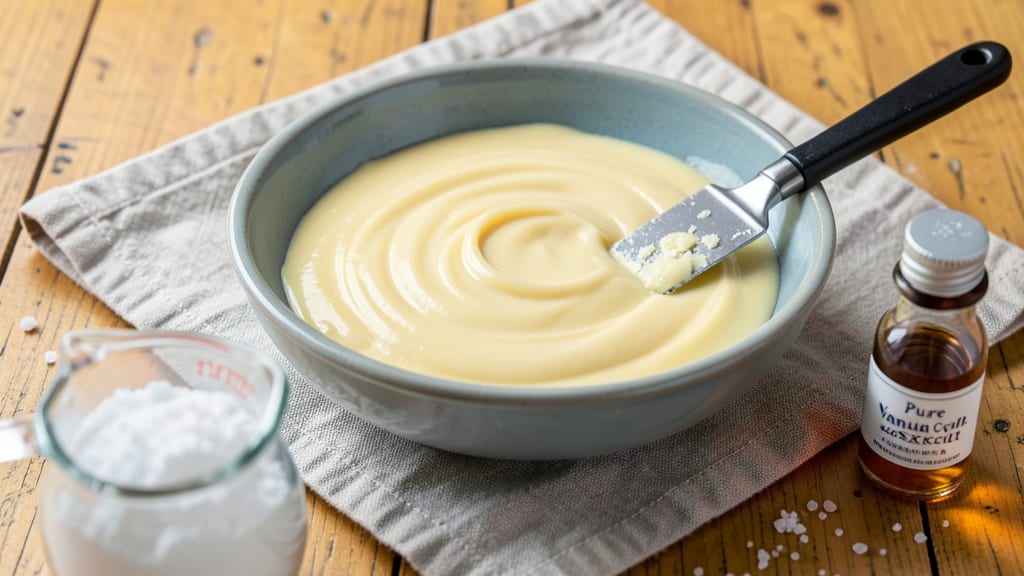
This butter icing recipe transforms ordinary cookies into showstoppers with just three ingredients and a 3-minute whip time. I learned the secret from Mrs. Henderson while making apple butter in Cincinnati—simple ratios make all the difference.
The key? Room-temperature butter and powdered sugar mixed to a velvet-smooth consistency that spreads like silk.
Perfect for chocolate chip, sugar, or snickerdoodle cookies, this icing delivers that classic buttery sweetness without the mess of royal icing. The recipe uses basic pantry staples—just butter, powdered sugar, and a splash of milk or cream—plus vanilla for depth.
It sets firm enough for decorating but stays spreadable, making it ideal for beginners and pros alike.
What sets this apart is the foolproof technique: cream the butter first, then gradually add powdered sugar to avoid lumps. The result is a glossy, tender finish that stays fresh for up to a week when stored properly.
Whether you're flooding cookies or piping borders, this icing delivers professional results every time.
For variations, swap milk for heavy cream for extra richness or add citrus zest for a tangy twist. Pair it with warm cookies straight from the oven for the ultimate treat. Let’s get started—your cookies deserve this upgrade.
Ingredients for butter icing recipe for cookies
Three core ingredients create this restaurant-quality butter icing for flawless cookie finishes.
| Ingredient | Amount | Notes |
|---|---|---|
| Unsalted Butter 🧈 | 1 cup | Room temperature for smooth mixing |
| Powdered Sugar 🍚 | 3 cups | Sifted for lump-free texture |
| Heavy Cream 🥛 | ¼ cup | Whole milk for lighter version |
| Pure Vanilla Extract 🍯 | 1 tsp | High-quality for authentic flavor |
| Diamond Crystal Kosher Salt 🧂 | ¼ tsp | Fine grain for delicate seasoning |
The butter is non-negotiable—European-style unsalted (like Plugrá or Miyoko's) yields the richest flavor and smoothest texture. Room temperature is critical; if too cold, it won't cream properly. Whole Foods and specialty grocers stock the best brands, but any high-quality unsalted butter works if it's at least 82% fat content. Powdered sugar should be sifted before measuring to prevent graininess—Domino brand is consistently reliable. For the liquid component, heavy cream adds luxurious body, while whole milk creates a lighter finish. Both work beautifully, so choose based on your preferred consistency.
No heavy cream? Whole milk plus 1 tbsp extra powdered sugar mimics the texture. Substituting vanilla? Almond extract at half the amount works in a pinch, though it alters the profile. For salt, Diamond Crystal dissolves more evenly than table salt—if you only have table salt, reduce to 1/4 tsp since it's finer. The powdered sugar can be swapped for confectioners' sugar from Sugarfina for a finer crumb, though it's pricier. Avoid pre-sifted powdered sugar; it loses volume and may contain anti-caking agents that affect texture. If you're making this ahead, store the dry ingredients (powdered sugar and salt) together in an airtight container to prevent moisture absorption.
This icing stays fresh for up to 1 week when refrigerated in an airtight container, though it thickens slightly. To restore spreadability, microwave for 10-15 seconds or let sit at room temperature for 5 minutes. For long-term storage, freeze portions in 1-tbsp increments between parchment paper. Thaw overnight in the fridge before use. The key to professional results? Work with room-temperature butter and mix at a low speed to avoid incorporating air. For a glossy finish, brush the top with a tiny bit of milk before serving—it enhances the sheen without altering the texture.
Why You'll Love This Recipe
- Three-Ingredient Magic: I swear by this combo—soft butter, powdered sugar, and a splash of heavy cream. That’s it. No fancy mixers or stress; just melt, whisk, and go. Even when I’m exhausted, this icing comes together faster than my coffee brews.
- Velvet Smooth Finish: The heavy cream makes it luscious, not grainy like some icings I’ve tried. A pinch of salt and real vanilla? That’s the secret—it’s rich but not cloying, with just enough depth to make every bite feel like a treat.
- Party in a Jar: Make a big batch once, then drizzle it on cookies for holidays, potlucks, or just because. It keeps in the fridge for days, so you’re always ready to impress. (My go-to for last-minute cookie gifts—no one suspects how easy it was.)
- Budget Buster: Butter and powdered sugar are pantry staples, and you’ll use less than store-bought tubes. Plus, the heavy cream adds that restaurant-quality sheen without breaking the bank. Honestly, this icing pays for itself after two batches.
Step-by-Step instructions for velvet-smooth butter icing
Here's the method for a flawlessly smooth, pipeable butter icing that sets perfectly on cookies.
Whip the Room-Temperature Butter to Cream
In a stand mixer fitted with the paddle attachment, combine the 1 cup unsalted butter at room temperature. Beat on medium speed for 2-3 minutes until completely smooth and free of any graininess. You'll notice the butter transform from a soft solid into a pale, creamy base—this is your foundation for a velvety texture.
The butter must be fully emulsified at this stage; any lumps will create a grainy texture in the final icing. If you notice any resistance or uneven blending, let the butter sit at room temperature for an additional 5 minutes before continuing. This step ensures your icing will spread beautifully and set properly on cookies.
Gradually Incorporate Powdered Sugar for Smoothness
With the mixer running on low speed, slowly add the 3 cups powdered sugar through a fine-mesh sieve. This gradual addition prevents clumping and ensures even distribution. After all the sugar is incorporated, increase the speed to medium and beat for 3-4 minutes until the mixture is completely smooth and pale in color.
At this point, you should have a thick, spreadable paste. If the icing appears too stiff, proceed to the next step as the heavy cream will help achieve the right consistency. The key here is patience—rushing this step can lead to a gritty texture that ruins the professional finish. Sift the sugar again if you notice any lumps forming during mixing.
Add Heavy Cream and Vanilla for Stability
Reduce the mixer speed to low and add the 0.25 cup heavy cream and 1 teaspoon pure vanilla extract. Mix for 1-2 minutes until fully combined and the icing reaches a smooth, pipeable consistency. The heavy cream adds stability and prevents the icing from becoming too thick or cracking when set.
This is where the magic happens—the cream and vanilla work together to create a balanced flavor profile while maintaining the icing's structural integrity. Taste the mixture at this stage and adjust the vanilla if needed, but be cautious—too much can overpower the butter's natural sweetness. The icing should now be thick enough to hold its shape when piped but still spreadable with a spatula.
Incorporate Salt and Achieve Final Consistency
Add the 0.25 teaspoon diamond crystal kosher salt and mix on low speed for 30 seconds to evenly distribute. This subtle salt enhancement balances the sweetness and enhances the butter's natural richness. If the icing is too thick for your desired application, add 1-2 teaspoons water at a time until it reaches a smooth, spreadable consistency.
For a glossy finish, transfer the icing to a piping bag fitted with a star tip or use a spatula to spread it evenly over cooled cookies. The icing should set at room temperature within 30-60 minutes, creating a firm but still pliable surface. If you need to adjust the setting time, refrigerate the iced cookies for 10-15 minutes to accelerate the process.
Pro Tips For Making Butter Icing Recipe For Cookies
- SOFTEN THE BUTTER FIRST: I learned this the hard way—trying to mix cold butter into powdered sugar just makes a greasy mess. Let the butter sit at room temperature for 20-30 minutes (or microwave it for 10 seconds, then let it cool slightly) so it’s pliable but not melted. This ensures smooth, spreadable icing that doesn’t clump.
- SIFT THE POWDERED SUGAR: Powdered sugar is notorious for clumping, and clumps in your icing mean lumps on your cookies. Sift it directly into your mixing bowl before adding anything else—this aerates it and keeps your final icing silky. (Yes, even if you’re impatient like me, take the 10 seconds.)
- ADD THE CREAM GRADUALLY: Pouring all the heavy cream at once turns your icing into a soupy disaster. Start with half, mix until smooth, then add the rest a tablespoon at a time. This keeps the texture rich but stable—no runny drips or stiff globs. (And resist the urge to rush; your cookies will thank you.)
- SALT AT THE END: If you add salt early, you’ll over-salt the butter and cream before balancing it with powdered sugar. Taste the icing after mixing everything else, then add a pinch of Diamond Crystal kosher salt (about ⅛ teaspoon) to brighten the flavors without overpowering. (Proportion matters—start small.)
Creative variations of this recipe
Citrus Zest Twist
Brighten your cookies with 1 teaspoon lemon or orange zest added during Step 3 when mixing the heavy cream. The citrus oils cut through the richness while adding a refreshing tang—perfect for spring and summer baking.
I discovered this trick while making lemon bars for our Portland farmers market booth, and it became an instant crowd-pleaser. 🍊
Spiced Vanilla Bean
Replace pure vanilla extract with 1 vanilla bean scraped and seeds added during Step 3. For extra warmth, add ¼ teaspoon cinnamon or a pinch of cardamom—this works beautifully with snickerdoodles.
I learned this version from my college roommate who grew up in Louisiana, and it adds a sophisticated depth to the classic butter flavor.
Brown Butter Depth
For a nutty, caramelized flavor, brown the butter before Step 1 by melting it in a saucepan over medium heat until it turns golden and smells toasty. Let it cool slightly before whipping.
This technique elevates the icing to gourmet status—ideal for chocolate chip cookies. I first tried this when making cookies for Thanksgiving, and it became our family's signature touch. 🔥
Salted Caramel Fusion
Add 2 tablespoons salted caramel sauce (like Trader Joe's or homemade) when incorporating the heavy cream. This creates a decadent flavor combination that pairs perfectly with chocolate cookies.
For extra richness, use ½ cup heavy cream instead of the standard amount. This variation is my go-to when baking for holidays—it feels indulgent without being overly sweet.
Coconut Milk Adaptation
For a dairy-free version, substitute the heavy cream with ¼ cup coconut milk (full-fat for best texture) and reduce the powdered sugar to 2½ cups. The coconut adds a subtle tropical note that works beautifully with macadamia nut cookies.
I developed this after Lily asked for dairy-free treats, and it became a regular in our Portland kitchen. 🌴
Espresso Boost
Add ½ teaspoon instant espresso powder during Step 3 for a subtle coffee note that enhances chocolate cookies. This variation comes from my Italian grandmother's recipe collection—she used it for biscotti.
The espresso deepens the chocolate flavor without making the icing taste like coffee. Perfect for chocolate lovers who want complexity. ☕
Nutrition facts
Frequently asked questions
Why does my butter icing turn grainy?
Graininess happens when butter isn't fully creamed or powdered sugar isn't sifted. Always whip butter until completely smooth and add sugar gradually through a fine-mesh sieve. If it's too late, blend briefly with a hand mixer to break up lumps. The key is patience—rushing creates texture issues.
Can I use margarine instead of butter?
Margarine works in a pinch, but it lacks the rich flavor and proper fat content for professional results. For best texture and taste, stick with unsalted butter (82% fat or higher). Margarine may create a softer set and less flavorful finish. If you must substitute, use 1 cup butter-flavored shortening instead.
How do I fix icing that's too thick or too thin?
For thick icing, add 1 teaspoon milk or water at a time until smooth. If too thin, mix in 1 tablespoon powdered sugar and adjust gradually. The ideal consistency should coat the back of a spoon and hold its shape when piped. Test on a small cookie first to gauge thickness.
Will this icing work on warm cookies?
No—always let cookies cool completely first. Warm cookies will melt the butter, causing the icing to slide off or become sticky. For a glossy finish, chill iced cookies for 15-20 minutes before serving. This also helps the icing set properly for decorating.
Can I color this icing for decorating?
Use gel food coloring for vibrant hues without altering texture. Add a few drops at a time while mixing on low speed. For pastel shades, start with 1 drop and adjust. Avoid liquid coloring—it can make the icing too thin. Test consistency after adding color.